
By Jaiden Thomas
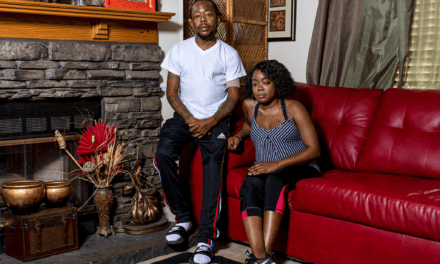
Kiara Brokenbrough’s budget-friendly wedding garnered millions of views on TikTok. Though, after four years, the creator with the $47 bridal gown made headlines for a heartbreaking reason.
On March 30, the 32-year-old unexpectedly died during the birth of her first child. While her exact cause of death remains unknown, Brokenbrough’s passing, just days before Black Maternal Health Week, underscores the critical importance of carrying on the fight to end the maternal mortality crisis among Black women. The pregnancy-related mortality rate for Black women in the U.S. is more than 3 times the rate among white women, yet more than 80% of pregnancy deaths can be prevented, according to the Centers for Disease Control and Prevention (CDC).
Now that the welcome and necessary commemoration of Black Maternal Health week is complete, experts are continuing to assess what must be done next to make pregnancy safer for Black women. The Black Mamas Matter Alliance is essential to this work. They are advancing the fight nationwide, with their Black Maternal Health Resolution Guide, a tool to help activists at the local level create legislation to support Black maternal health in their state.
On the clinical side, care providers like Gladys Wilkins, an OB/GYN Physician Assistant with 35 years of experience, references the importance of patient-centered care and health equity, when discussing the unique encounters many Black women face when receiving medical care.
“Unfortunately, there are instances where patients who were initially dismissed later experience worsening symptoms or life-threatening complications,” Wilkins said. “I have personally evaluated patients who were previously assessed at another facility and discharged, only to later discover significant or critical medical conditions that required immediate attention. These experiences highlight the importance of active listening, validating patient concerns and maintaining a high index of suspicion,” she added.
New research validates and expands on Wilkins’ analysis of how to improve maternal care for Black women. A March 2026 study found that “prolonged postpartum follow-up, training on unconscious bias, and community-based care are examples of effective initiatives … [along with] thorough equity- focused strategy that enhances clinical practice, addresses social determinants of health, and removes structural obstacles in healthcare delivery.”
While the World Health Organization defines maternal mortality as the death of a woman while pregnant or within 6 weeks of the end of the pregnancy, the CDC notes that pregnancy-related deaths can occur up to 1 year after giving birth, underscoring the critical importance of access to attentive, high-quality postpartum care and support. Common causes include hemorrhage and chronic conditions like preeclampsia, conditions that occur at rate 60% higher in Black women when compared to white women
Activists, doctors and even celebrities have long suggested that racism also contributes to these inequities.
During a 2021, Capitol Hill hearing on the Black maternal health crisis Joia Crear-Perry, M.D, the founder and president of the National Birth Equity Collaborative, testified and stated that race was another underlying cause of Black maternal mortality. “There are not enough Black workers of color, leaving Black birthing people with limited autonomy or opportunity to receive racially concordant care,” she explained.
Following Dr. Crear-Perry’s at the hearing, Tatyana Ali, maternal health advocate and “Fresh Prince of Bel-Air” actress, shared her own birth-related struggles. “The birth of my oldest was my first experience of a kind of institutionalized racism and paternalism that can kill,” Ali said.
The ongoing work of legends in the maternal mortality space, like Dr. Crear-Perry, and the willingness of public figures like Ali to open up about deeply personal experiences is, in part, why we can hope for progress. Their testimony, along with others at the local level, shocked legislators into action.
In March, the MOMNIBUS Act — a package of 14 bills intended to end the maternal mortality crisis was reintroduced by Representatives Adams, Underwood and Booker. The comprehensive legislation addresses everything from the broad social determinants that lead to maternal mortality, to increasing mental and physical health care for mothers and diversifying the pregnancy care workforce.
Haunting yet resonant, the hearings, the many studies, and recent legislation that has had a disproportionate and devastating impact on access to care for pregnant Black women point to the incredible complexity of the maternal mortality issue. Prior to the recent changes in reproductive health law in the U.S., Black women were already facing health care that was not culturally competent or impartial. The loss of Roe v. Wade only intensified the problem by further limiting access to needed and timely care in the states with the highest Black maternal mortality rates like Mississippi, Alabama and Texas.
Tashima Lambert Giles, M.D, is an obstetrics and gynecology professor at Virginia Commonwealth University. As an experienced OB/GYN, she raises the alarm about what happens when women cannot quickly and easily access needed care before, during and after pregnancy. “In obstetrics, minutes do matter,” Giles said. “In the midst of an emergency, slowing my pace can be the difference between life or death or difference between birth injury or not or hemorrhage or not.”
As Black physicians and concerned legislators strive to improve care and reform policy, Black doulas are transforming care at the community level. For Black women, doulas often provide the trusted, compassionate care which is often missing in hospitals and clinics. Research shows that doulas are not only powerful advocates for Black women, the care they provide improves birth outcomes, reducing preterm birth and postpartum complications.
For Black mothers and their families, this expanding network of activists and providers determined to bring about positive change is essential to making pregnancy and childbirth the safe, joyful experience it was meant to be for all Black women. It must because lives are at stake.
“Health care shouldn’t be a transaction, like going to a bank and cashing a check. The health of our patients and their outcomes are so intertwined with how they live, work and play,” said Giles.
Jaiden Thomas is a freelance journalist in Washington, D. C.