By Almeta E. Cooper
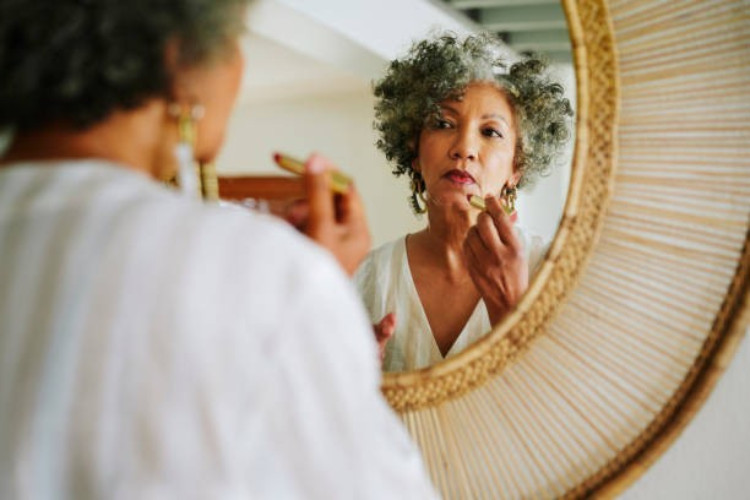
I sat down recently to watch the new Netflix documentary, “The Plastic Detox” which explores how purging plastic from daily life might affect fertility outcomes among couples trying to conceive. I didn’t think the film would apply to me – I’m past my baby-making years – but nonetheless, it alerted me to toxic threats in my own life arising from the minimally regulated use of petrochemicals and plastic. As a Black woman who has worn makeup and used Black beauty products for decades, it made me look at my beauty drawer in a whole new light.
Most women are familiar with the concept, Beauty Knows No Pain, or some variation of it. As a Black woman, the phrase assumes an even more insidious meaning. It applies to the love/hate relationship many of us have with Black beauty personal care products that push Eurocentric standards and are rooted literally in pain from the application of some products. While certain harsher ingredients have been replaced over the decades, I learned through this documentary that many current products are known to contain even more dangerous hazards to our health, thanks to phthalates, parabens, formaldehyde, and other impossible-to-pronounce chemicals and even microplastics.
“The Plastic Detox” reveals health risks linked to these chemicals that include endocrine disruption, breast and ovarian cancer, organ system toxicity, genetic defects, infertility, menstrual disorders, impotence, miscarriages, still births, birth defects, low birth weight or premature birth, childhood cancers, and developmental disorders. Noted epidemiologist Dr. Jasmine McDonald, who is featured in the film, shared research that shows a pattern: the earlier girls use hair products, the earlier they begin their menstrual cycle, increasing their risk of cancer later in life.
Digging into my own beauty supplies, and now thinking about my family and friends and their exposures, I learned that some of our best-known, go-to products contain parabens, which are made from fossil fuels and used to extend the shelf life of hair products, including those used by Black women. These chemicals are endocrine disrupters that mimic the hormone estrogen and interfere with reproductive health. And to add insult to injury, beauty products are often packaged in excessive amounts of plastic that, at a minimum, are sustainably irresponsible because they do not break down, are not biodegradable and contaminate our soil and water.
Microplastics – tiny, solid particles of plastic — are also common in our lotions, scrubs, and makeup, often used to bulk out products and enhance product texture and shimmer. Microplastics leach harmful chemicals into our bodies, like phthalates and heavy metals, and they are themselves considered endocrine disruptors. There exist safe alternatives, so there is no reason to add them as ingredients in our beauty products.
The experience of looking at ingredient labels has been eye-opening and I encourage others to ask themselves the hard questions too: What is the cumulative impact of my use of Black beauty products over the decades I’ve used them? What do I really know about the “safety” of my hair care, skincare and makeup products or their packaging? Do I know how to read and understand the name of the unpronounceable chemicals on the packaging? Who is protecting me or the little Black girls imitating mom when they paint their nails or ask for their hair to be braided with extensions? According to Dr. McDonald, the answers to these questions are still unclear and yet the marketing doesn’t stop: the global skincare industry generated about $122.11 billion in 2025 and continues to rapidly grow. Black women spent about $9. 4 billion in 2023 on beauty products and are outspending other groups of women by as much as 9 times more in the U.S.
As I have pursued learning more about the products I mistakenly thought were safe to use, I have also discovered the diligent new efforts of researchers, community and consumer groups to investigate and expose the health and environmental harms related to products marketed to Black women. As these reports and advocacy efforts receive more widespread attention, this information is slowly reaching more Black women and enabling us to make more informed choices. This includes the 2025-2026 Consumer Reports articles and campaign for Food and Drug Administration action to address the dangers of contaminated synthetic hair used for braiding primarily by Black people, the advocacy by the Campaign for Safe Cosmetics that helped obtain passage of the first update in beauty product safety in almost 90 years, the collaborations with WE ACT Beauty Inside and Out (BIO) Campaign and the Let’s Reclaim Our Ancestral Roots (Let’s R.O.A.R) pilot study designed to educate Black and Brown consumers about environmental racism and reduce demand for harmful products, with the long-term goal to improve fetal and maternal health, and the passage by 27+ states of the Crown Act (Creating a Respectful and Open World for Natural Hair) state laws that seek to end workplace discrimination against natural hair styles.
While this form of beauty injustice — toxic products— remains pervasive in the marketplace, it is good to see the concept of “clean beauty” emerging and expanding. As Black women, we must cope with the knowledge that the products we rely on are more likely to make us sick and to harm our unborn children. To change the current trajectory, we must advocate for stricter transparency and effective regulation that provides Black women with the information necessary to make informed choices affecting our health. It is time that we use our enormous purchasing power to demand improvements.
No stranger to makeup and hair products (she grew up in her mom’s salon), Beyoncé captured the essence of Black women’s relationship with beauty expectations in her 2013 double platinum single,” Pretty Hurts.” She explained in an interview, “I feel like sometimes the world is a big contest, we’re all being judged. I wanted to capture how humiliating and insecure that makes you feel.” So long as beauty standards emphasizing Eurocentric beauty remain predominant and the marketplace or regulation does not require the beauty industry to provide products free of toxic chemicals, the current concerns about Black beauty personal care products will persist. However, we can make progress by taking steps to change the trajectory of our interactions with beauty products — and giving ourselves some grace on the journey.
Almeta E. Cooper is the National Manager of Health Justice for Moms Clean Air Force, a community of 1.6M moms and caregivers dedicated to protecting children from pollution and climate change.
Photo: Mapodile, Unsplash